Welcome message

Dear friends,

Welcome to my blog. I am honored to have you visit. I hope you'll find my articles a blessing. I welcome your input and especially comments and questions.

I write as a Christian from Jerusalem, Israel about Biblical subjects.

I am particularly interested in the subjects of children, families, women's issues, corporal punishment, science and nature as these subjects relate to the Holy Scriptures.

For more information, see my website: www.biblechild.com

With every good wish - Samuel Martin

Monday, May 23, 2011

To parent is human, to forgive divine

Working on a new book with a tentative title as follows:

To parent is human,
 to forgive divine

Forgiveness Parenting:
Exploring the God/Parent/Child relationship in the Christian home
STAY TUNED - FOR MORE INFORMATION,
Write: info@biblechild.com


Thursday, May 19, 2011

I have set the Lord always before me: Surely he is at my right hand, I shall not be moved - Psalm 16:8

I have set the Lord always before me: Surely he is at my right hand, I shall not be moved - Psalm 16:8

This passage is one that I wanted to bring to your attention from the inspired pen of David. There are many important aspects to this verse, but I wanted only to talk about one.

Psalms is a very special book with lots of complexities and it is one that we need to look at closely and carefully because it is full of information if we are just willing to see it. Not only is the information itself important, but also how it is presented and organized.

God gave the writers of Psalms inspiration and it comes out in many ways. Some of the important things that many have seen in Psalms are the various literary devices that are used to convey ideas. For example, many of us may know about acrostics.

It is the idea that there are these 22 verse segments where each letter of the Hebrew alphabet begins the first word of the particular section. Psalm 119 is the prime example. There are others. They indicate a kind of literary completeness or perfection. There are others. We also have broken acrostics that show a sense of evil or incompleteness like in Psalm 9-10.

We also find that there are other numerical features that are very interesting in the Psalms whose meanings we are still trying to understand better.

One of them is found in this verse I have given here, Psalm 16:8. The first things about this verse right away is an association with the number 8. Note Psalm 16 and verse 8. This is not the only association with the number 8 for this verse.

In the original Hebrew, there are 32 letters to this verse. They are:

שויתי יהוה לנגדי תמיד כי מימיני בל אמוט

It is really interesting to see these relationships used with numbers because they have meaning; it is just there for us to find out the truth.

Note that this verse, written by David, has a three-fold relationship with the number eight to it being the 8th verse, of the 16th chapter with 32 letters. Note that we know that the number 888 is associated with Jesus Christ.

Look at the subject of the verse, talking about the Lord being at the right hand. This verse seemingly has messianic overtones.

To close, the book of Psalms is full of such ideas and we need to study this book more because it has true information in it which can help us now and into the future as it has great prophetic significance.
Finally, join with me in praying this verse to remember that if we always set the LORD before us, we will always have the right orientation to things, knowing that the Lord both gives and takes away, Blessed be the name of the LORD.

The value of the letters of the name Jesus and its correlation to the book of Revelation

I learned something a long while ago about the name Jesus. It has a numerical value that is quite remarkable. The name “Jesus” in English comes from the Greek name Ihsouz (Iesous). In the Greek language, each of the letters possesses a numerical value. Here are the numerical values for Ihsouz

I - 10
h - 8
s - 200
o - 70
u - 400
z - 200

Total – 888

There are definitely numerical relationships which can teach information and point us to Christ in more ways that we may realize.

For more information, please write me. I have a newsletter that I send out with regular new research.

With every good wish,

Samuel Martin
www.biblechild.com
Email:info@biblechild.com

Thursday, June 28, 2007

Some recent photos from a short trip around the Holy Land

Some recent photos from a short trip around the Holy Land

THE SEA OF GALILEE

I have added this photo of my wife, Sonia, and my little girl, Christine, which was taken from the traditional spot of the Mount of Beatitudes. My dad always felt that the actual spot was perhaps more to the southwest from here and up on a elevated area down near the sea. It is hard to say. Some say it was more nearer to this point.

At this point, we are looking directly south. You can see how the Sea of Galilee is quite large and it sits down in a basin area 212 meters below sea level.

There are fewer lakes more beautiful than the Sea of Galilee, which could aptly be called according to Fr. Hoade (author of the standard volume Guide to the Holy Land) this is the "Lake of Jesus" and to that statement, I could not agree more.

THE SYNAGOGUE IN NAZARETH


I have added this photo to the left. It for me represents one of the most special places in the whole world. It is the location of "the synagogue" mentioned in Luke 4:16, which says:

"And he came to Nazareth, where he had been brought up: and he entered, as his custom was, into the synagogue on the day of the sabbaths and stood up to read."

This day was not just any sabbath (or Saturday). No, this was the day of Pentecost when this passage was read. Read on the next few verses and get the picture of what was said in this place.

This for me is a place which was for our Lord, a central place in His spiritual life. There is so much truth in Luke 4:16 if we are just willing to hear it. Look at it. It says that Jesus had been brought up in Nazareth, not somewhere in India or another place. Note that also in this place, Jesus frequented it regularly. It was His custom to be here on the Sabbath day.

For me this is just one of those special places because my dad took me there maybe 7-8 times growing up and for him it was a real authentic place. From this place, the good news was proclaimed and we all know what were the results: the blind saw, the hungry were fed, the poor received comfort, the sick were healed, and the captives were set free. A special place indeed.

Friday, November 17, 2006

Saturday, August 19, 2006

For some information about me and my first book see my website:

www.biblechild.com or contact me on info@biblechild.com.

"Thy Rod and Thy Staff, They Comfort Me: Christians and the Spanking (Smacking) Controversy"

Please visit my personal website at:

www.hometown.aol.com/peacelvng1/myhomepage/index.html

For a recent review also see:

www.repeal59.blogspot.com - July 25 2006

Best Wishes,

Samuel Martin
Jerusalem Israel

Friday, August 18, 2006


August 18, 2006 - Jerusalem

Last week was a really amazing time for me. I saw my life go full circle.

In 1968, I first visited Israel with my family and my father, Dr. Ernest L. Martin, took me on my first visits to archaeological sites in Jerusalem and around the country. I can remember going with him to visit Jericho when there were no fences or tourist attractions. I can remember going with him to Tel Lachish in his Land Rover. These are just to name a few. What amazing memories. Being dropped off in the pottery shed to clean 2000 year old pots while working near the Western Wall with the excavation lead by Professor Benjamin Mazar.

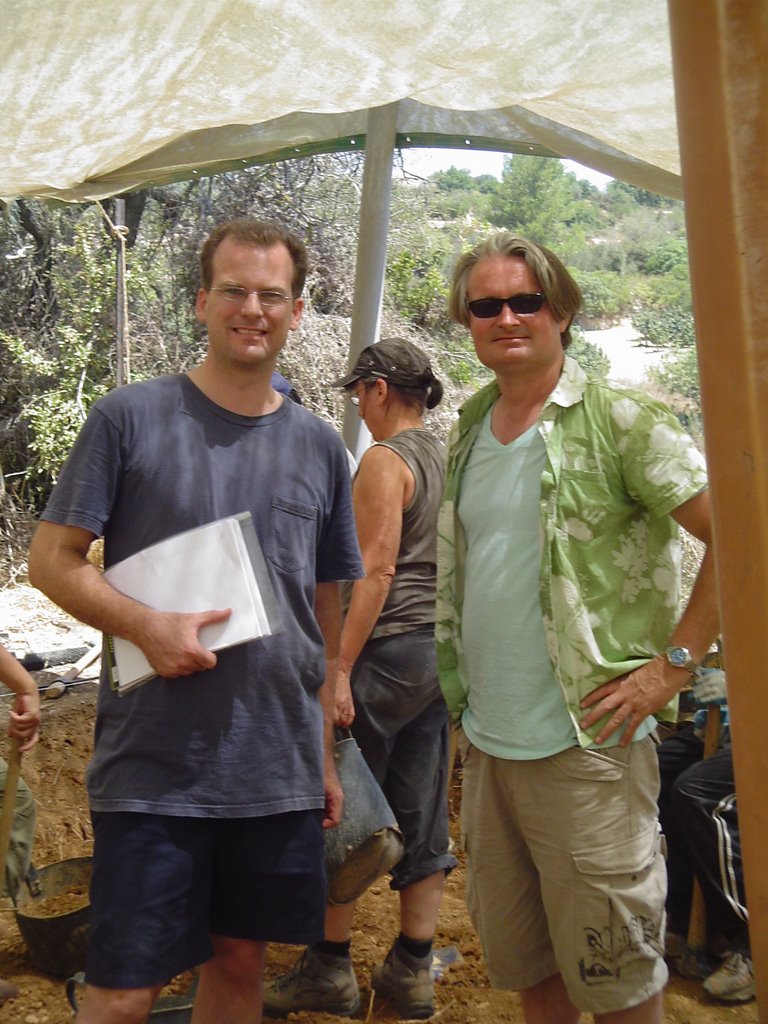
Well, today, it looks like my family still has archaeology in its blood. You can see me pictured ( I am on the left) with Dr. Shimon Gibson, a Senior Fellow at the Albright Archaeological Institute in Jerusalem at an excavation he is leading in the Jerusalem area.

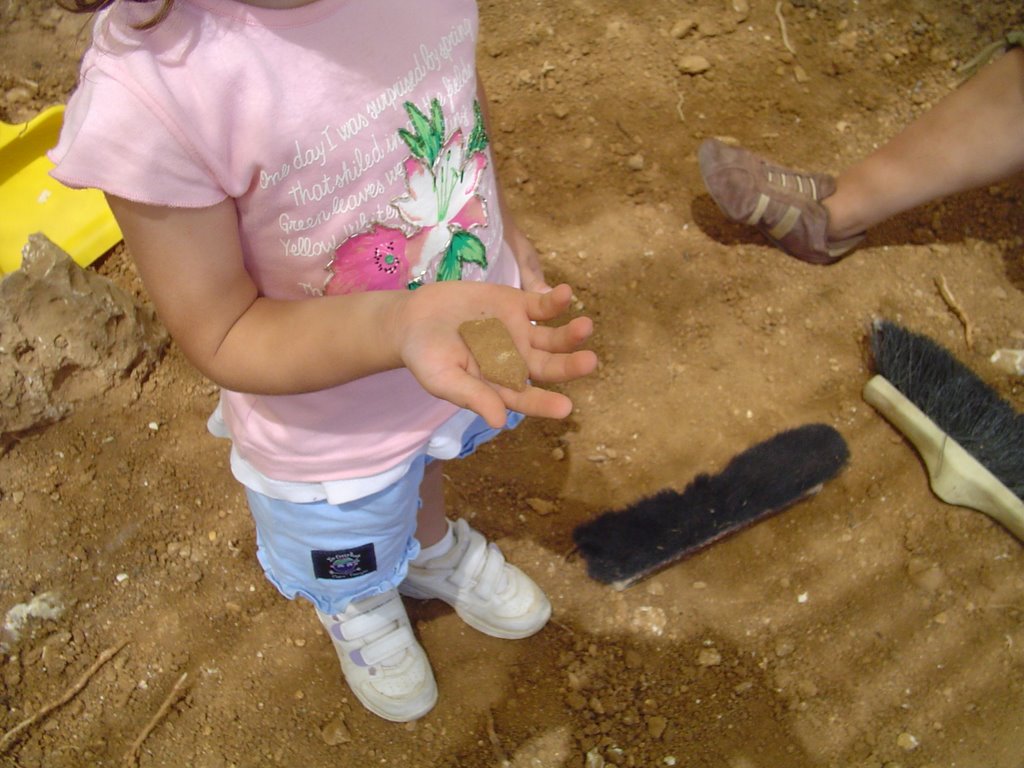
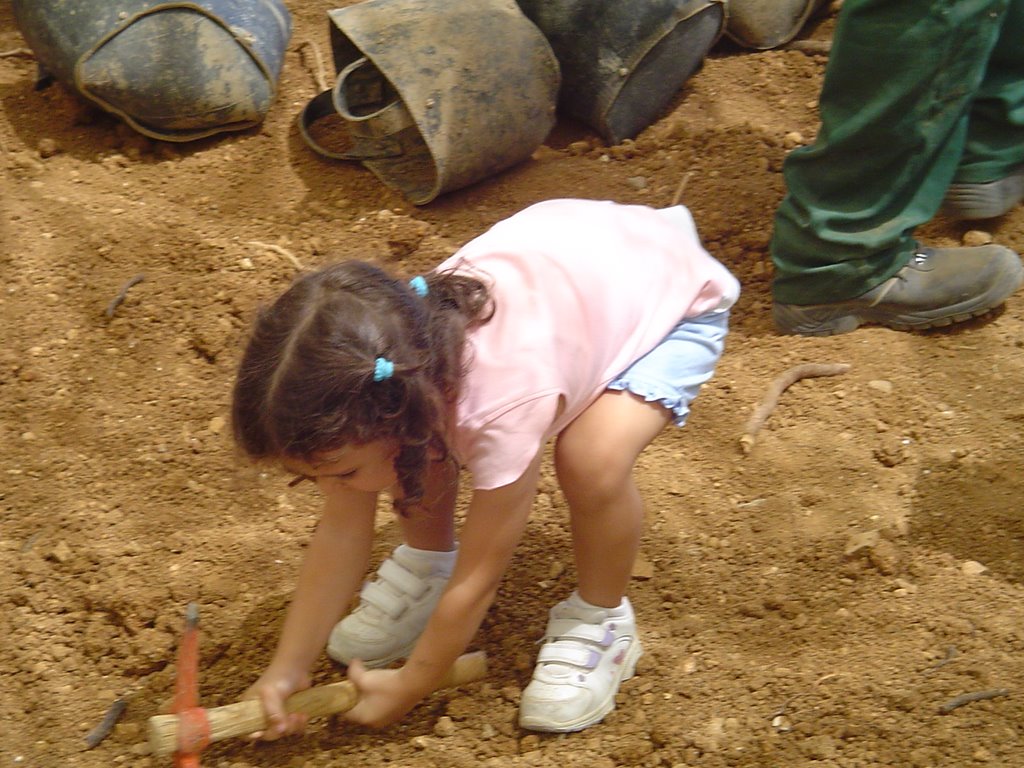
On this day, it was a pleasure for me to share this experience with my daughter, Jessica, age three. If the photos above are any indication, it seems she has a future in archaeology.

I urge anyone with kids who wants to have a really great time of discovery to come to Israel and get involved in archaeology. You never know what you might be involved in finding.

Samuel Martin
Jerusalem Israel


August 18, 2006 - Jerusalem

Last week was a really amazing time for me. I saw my life go full circle.

In 1968, I first visited Israel with my family and my father, Dr. Ernest L. Martin, took me on my first visits to archaeological sites in Jerusalem and around the country. I can remember going with him to visit Jericho when there were no fences or tourist attractions. I can remember going with him to Tel Lachish in his Land Rover. These are just to name a few. What amazing memories. Being dropped off in the pottery shed to clean 2000 year old pots while working near the Western Wall with the excavation lead by Professor Benjamin Mazar.

Well, today, it looks like my family still has archaeology in its blood. You can see me pictured ( I am on the left) with Dr. Shimon Gibson, a Senior Fellow at the Albright Archaeological Institute in Jerusalem at an excavation he is leading in the Jerusalem area.

On this day, it was a pleasure for me to share this experience with my daughter, Jessica, age three. If the photos above are any indication, it seems she has a future in archaeology.

I urge anyone with kids who wants to have a really great time of discovery to come to Israel and get involved in archaeology. You never know what you might be involved in finding.

Samuel Martin
Jerusalem Israel

Friday, July 07, 2006

Megiddo Prison to make way for pilgrims

Cleaning work on the Megiddo floor tiles earlier this year. (Antiquities Authority)

Megiddo Prison to make way for pilgrims

By Amiram Barkat

Prisoners are likely to be transferred from Megiddo Prison to make way for archaeologists and tourists, after the discovery of an ancient Christian prayer house - considered the oldest in the world - at the site last year.
In the spring of next year, the first stage of a new plan will be implemented and the four-dunam area of the prayer house will be placed outside the prison boundaries and opened to the public.
A plan to develop the site, which is in Wadi Ara, is shortly expected to be approved by the government.
It was drawn up by officials in the Prime Minister's Office and the Antiquities Authority together with the Megiddo regional council. The plan was presented last week to Minister Ophir Pines-Paz who is in charge of the authority.
Within four years, the prison is expected to be moved from its present site to another location.
The building in which it is located, that dates back to the British Mandate, will be turned into a center for tourists interested in ancient Christianity and the nearby airfield will be expanded to allow for pilgrim flights.

Government funding

The government is expected to fund most of the construction, which will cost millions of shekels.
The ancient church was discovered in the course of an archaeological dig at the prison last year.
The oldest known Christian prayer sites date back to the middle of the fourth century, but experts who have visited the Megiddo site believe it goes back to the start of that century.
The date is based on shards and coins found at the site, as well as three Greek inscriptions on the mosaic floor of the church.

Roman officer

The Antiquities Authority describes the site not as a church but as a "prayer house" since it was apparently located inside a Roman officer's private home, according to one of the inscriptions. Christianity became a legal religion in the Roman empire in the year 313.
Other findings that are indicative of early Christian rites are the central symbol of the fish, found in the mosaic, (later changed to a cross) and the fact that in one of the inscriptions, Jesus is referred to as "the lord Christos," a term which later disappeared.
President Moshe Katsav showed pictures of the site to Pope Benedictus XVI who is expected to be invited to pray there when the site is opened.

From haaretz.com 7/7/2006 - http://www.haaretz.com/hasen/spages/736350.html

Comments from Samuel Martin

When I saw this site last year, I referred some people to the information about it. It is an exceedingly important find because it helps us reach back farther into the Christian past here in Israel. What makes it so fascinating is that it appears to be dated prior to the time that the emperor Constantine and his mother Helena came to the country in 325 and began to influence many of the ideas after that time. Note, no crosses or other symbols which are today so familiar to us all. The fish is very prominent. What this find shows is the importance of looking back as close as we can to the time of the Bible and that finds associated with the period of the first decade of the 300’s will yield information which is more original than those associated with the time after 325.

This find also reminds of the importance of written records. These are the things that really stir up the passions of archaeologists. This is what they are really after.

When I see such things, it causes me to remember my dad and his passion for such things. Knowing him, I believe that when this story broke, he would have been on the first plane down here to give those who knew him and supported his work a first hand account of the find and the details concerning it. I hope in the future to be able to do the same thing concerning this site as it becomes more accessible.

One of the important things about archaeology here in Israel is the number of Christian sites that are being found. This one is but only the most recent. Many of you may have become aware of the site associated with John the Baptist in the Jerusalem region. http://www.baptistcave.org.il/eng/index.asp It seems that we are going to see more such Christian sites found in the future. Of particular interest will be ongoing and future excavations in the Jerusalem area. In this regard, you can follow ongoing developments of some of the projects taking place there by looking at www.tfba.org, which is an organization I know something about.

Archaeological Provenance and Archaeological Provenience

Living in Israel has given me a new perspective on these two concepts and their importance in understanding the past. For a definition of both, please see http://en.wikipedia.org/wiki/Provenance.

These concepts point to the importance of where things are in relation to space and time. In archaeology, this discipline is exceedingly important for helping us to understand where something that was found fits in to the puzzle which was the existence of the past. For example, if you were digging near a river and found an ancient encampment which had evidence of boats, fishing nets, fish remains, fish hooks, etc. You can determine that at some point in the past the people living there were involved in fishing in some way. For more specific details, more research is needed, but having these parts of the puzzle in place help you to draw conclusions. This is why this house of worship is so important because it takes us back to a time prior to 325 by its lack of utilization of crosses and similar religious motifs which are well known in later times, but are not in evidence in early sites like this one.

The same thing can be said about provenance when it comes to time. We know that in archaeology something found lust near the surface is not as old as something found below the surface. As you go farther down, the older things become, all other things being equal.

Living here in Israel has helped me to understand the importance of provenance in understanding the past, particularly in relation to our Christian heritage. For example, to understand the ancient history of Jerusalem, those who live nearer to Jerusalem, all other things being equal, are going to have a better opportunity to know the truth of the matter of the past simply by provenance.

This is a part of the reason why it will pay us to pay close attention to what is taking place here especially from an archaeological perspective. It is really exciting to see what is taking place with new finds appearing all the time. The best is clearly yet to come. Any person visiting Israel should make every effort to see this site if at all possible. Enquiries to your travel operator will let you know if they are including it on their itineraries.

For more information on this particular subject, you can do google images search on:

Oldest church Israel or Megiddo prison